February 2026
Linda D. Addison, Member of the Diverse Works Inclusion Committee.
The sole purpose of The Seers’ Table monthly column is to introduce HWA members to the work of underrepresented demographic writers and editors whose work might not otherwise be viewed, using the broadest definition of the word underrepresented to include, but not limited to, gender, gender identity, race, ethnicity, sexual orientation, disabled and neurodiverse.
You can see any of The Seers’ Table posts since inception (March 2016) by going to the HWA main page and selecting the menu item “HWA Publications / Blogs / Seers’ Table”.
Kate Maruyama recommends:
Jenna N. Hanchey is the creator and cohost of Griots & Galaxies, a podcast speculating African futures. Griots & Galaxies is produced by the ASU Center for Science and the Imagination and supported by the ASU Institute for Humanities Research and the Transformation Project. She also reviews African speculative fiction at the LA Review of Books. She is also a host on the Just Keep Writing Podcast.
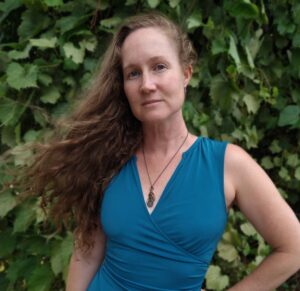
In addition to studying Africanfuturism, she is a British Science Fiction Association award-nominated speculative fiction author, and a Ignyte- and British Fantasy Award-nominated narrator for her work with Simultaneous Times. Her stories have been published in Nature, Liminalities, Daily Science Fiction, and Little Blue Marble, among other venues. She is a member of the Locus-award winning Codex Writer’s Forum and an Associate Member of the Science Fiction and Fantasy Writers Association. She is Poetry Editor and Audio Editor at Orion’s Belt Magazine.
She is the Immediate Past President of the Organization for Feminist Research on Gender and Communication.
Her academic work engages in decolonial and anti-racist analyses of Western aid and development initiatives in Africa, examining how future developmental trajectories are resisted and reimagined in the continent. Her research attends to the intersections of rhetoric, critical/cultural studies, African studies, Black feminisms, and critical development studies.
Her first book, The Center Cannot Hold: Decolonial Possibility in the Collapse of a Tanzanian NGO, examines how decolonial potential can emerge from the collapse of neocolonial aid and development structures. Her second book, Africanfuturism: Beyond Development, analyzes Africanfuturism in speculative fiction and the ways that Africans imagine futures beyond and against those predicted by the West. This work was awarded a 2024 Waterhouse Family Institute Grant, 2022 NEH Summer Stipend, 2023 ASU Humanities Institute Research Seed Grant, and Transformation Project Seed Grant, and is under contract with The Ohio State University Press for their series “New Suns: Race, Gender, and Sexuality in the Speculative.”
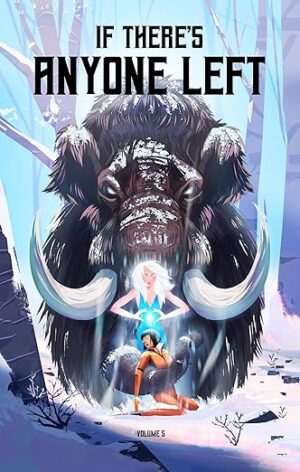
Recommended Reading: “Among the Beginnings Scattered Across the Kitchen Floor” from If There’s Anything Left, Volume 5.
Excerpt from Among the Beginnings Scattered Across the Kitchen Floor:
I have nowhere to put my beginnings.
Ends are easy; rinds of tragedy and misfortune stink up the cupboard, waiting to be sunk into soups. Crusty edges of heartbreak line the countertop, salty as dried tears. The fridge is filled with the fatty excesses of guilt.
I have more than enough, now, of everything. Except space. I have no need for beginnings, so I failed to plan for bringing them home.
Few of my recipes call for beginnings. I experimented with them years ago, back when I stewed and steamed for others rather than subsistence. Those dishes were juvenile, simple and sweet. I shake my head, loosening a memory. Landra and me around the table, laughing over apricots and cream. Pushing the image back into the recesses, I focus on what matters: what honeyed beginnings become. How the fluffy mallow of flirtation slowly hardens, and the rich depth of devotion turns on a dime. Some beginnings stay sweet indefinitely, but it’s impossible to tell which.
That’s the problem of cooking with beginnings; they are unpredictable.
I know what to make of ends. How to bring out their seasoned flavors—bitter and intense. Ends are precise, interchangeable. They never become something they aren’t supposed to be, staying just so. Forever. It’s much easier to cook this way, I’d told Landra. I could tell she tired of the repetition, even as I reveled in my flawless dishes. I wanted to create perfection for her. I thought I had. Right up until the day she left.
Follow Jenna at: jennahanchey.bsky.social or learn more about her at www.jennahanchey.com.
Geneve Flynn recommends:
Brian Craddock spends many a night guarding old buildings and has thus become familiar with things that literally go bump in the night. When he’s not securing the welfare of empty abodes, he is writing a new book or comic. Concerning the latter, he’s likely illustrating it, too.

Travels abroad often inform his work, and his sophomore novel, Chuwa, is no exception, drawing on his many travels through Pakistan and a chance encounter with the unfortunate and so-called rat-people, street beggars exploited both for their vulnerability and for the superstitions that surround them. While he has more earnest projects underway on the subject exploring the real-world impacts on these people, an opportunity arose in 2008 to pitch a horror film for development, and so Brian wrote a screenplay based on a loose concept of the legend of a rat-people living alongside humans in the back streets of Pakistan’s cities. Chuwa: The Rat-People of Lahore was more old-school monster matinee than real-life hardship, creating a new and unique mythos of supernatural beings in the subcontinent.
The film never eventuated, and after ten years of sitting on the script, Brian felt it was time to let the rats loose, adapting the screenplay into a novel, which was short listed for an Aurealis Award in 2019. A sequel is in development, long overdue for release due to brain-fog he developed from chemotherapy treatments shortly after the release of the first Chuwa book.
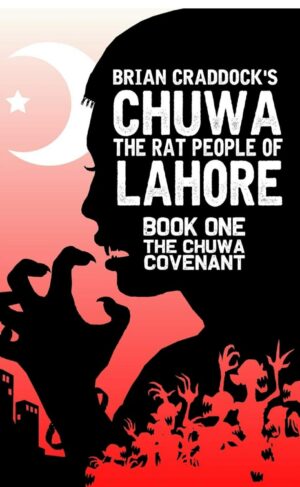
Recommended Reading: Chuwa: The Rat-People of Lahore
Excerpt from Chuwa: The Rat-People of Lahore:
“Leave her alone!” barked Raza.
“Or you’ll do what?” one of the intruders teased.
Jasmine put her hands up in surrender and was released for her compliance.
“Okay, just don’t hurt us,” she said, and then to Raza: “Baby, hold still, okay?”
“I can’t see, Jasmine,” he whined, his hands over his eyes. “They blinded me.”
She lifted Raza’s shirt to reveal the scars running across his stomach.
“Is this what you want to see?”
One of the intruders flipped back its hood, and Jasmine stared in astonishment. The man’s face was neither human nor animal, but somewhere in between. It was covered in a fine fur, and his snout was like a beasts’, with long whiskers curling back over his cheeks. His top lip twitched as he stared fascinated at Raza’s scars, revealing incisors thick enough to bite clean through her arm. The light from the kitchen reflected in his eyes, and she saw they were completely black. If she didn’t know any better, Jasmine would guess she was faced with a rat, not a man.
Slowly the creature reached a hand out, his deadly claws extending from the tips of his fingers as if ready for injury. Jasmine held her breath, her eyes watering, as the creature, the chuwa, glided his claws a hair’s breadth from her husband’s stomach, following the lines of his scars. They matched the creature’s claws perfectly.
Jasmine shook her head, discerning the implication. “No, no,” she pleaded. “He’s not with you. He’s my husband.”
“Let’s go,” the chuwa simply said.
The other intruders crowded around Raza, looping their arms with his and lifting his feet from the floor. Raza cried out for Jasmine.
Follow Brian at: Broken Puppet Books
Author photo credit: Dante Halloran
Linda D. Addison recommends:
Sarah Langan grew up on Long Island and now lives in Los Angeles with her family. She got her MFA from Columbia University, and her MS in Environmental Toxicology from NYU. She writes genre, literary, and everything in between. She lives in Los Angeles with her husband, daughters, and rabbits.
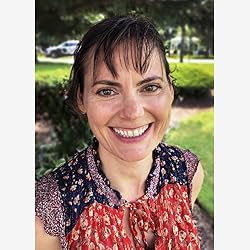
She’s received three Bram Stoker Awards for her fiction, and her work has often been included in best-of-the year lists and anthologies. She’s a founding board member of the Shirley Jackson Awards, and works in both film and prose.
In Pam Kowalski Is A Monster!, published by Raw Dog Screaming Press May 2025, Janet investigates her high school nemesis Pam, now a famous psychic predicting apocalypse, but digging into their past reveals disturbing truths about whether Pam’s predictions might be real.
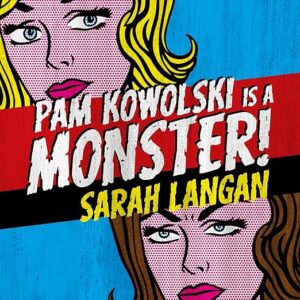
Recommended Reading: Pam Kowalski Is A Monster! (Raw Dog Screaming Press, May 2025)
Excerpt from Pam Kowalski Is A Monster!:
Scripple-scrapple.
The night Madam Pamela’s Big Reveal went catastrophically wrong, I was staying in her guesthouse, waiting for the interview that I hoped would revive my career. From the window, I watched her staff flee. Wide-eyed and terrified, they raced, shocked too insensate to scream. Little whirls of gravel dust cycloned up from the circular driveway as their fancy electric cars peeled out. Some didn’t bother with cars. In dressy-casual business slacks, they ran.
The mansion glowed with a kind of phosphorescence. Inside was Pam’s Parlor of Extraordinary Delights, from which she broadcast her hit psychic show The Madam Pamela Hour. She’d built Split Foot Mansion here in Detroit because she claimed that this specific location was the most magic on earth, where meridians intersected, opening a gateway between worlds. With the aid of her “spirit companion” she’d dug a hole through the floor of her Parlor, where she claimed she’d broken the barrier between the visible and the unknown.
Glory Hole, I’d joked in a blog.
Right now, she was broadcasting her Big Reveal. For $200 per view, people were supposed to learn Madam Pamela’s secrets. She’d promised to let them see the world from her eyes. What was it she saw? She’d told us explicitly—dreadful drearies, she called them. Until lately,
I’d assumed she was lying.
Pam Kowolski was rich, famous, and successful. I’d hated her for a long time. When I’d learned about her Big Reveal, I’d spent months researching this story, in the hopes of writing the pitch-perfect hit piece to take her down. I’d fantasized about her destruction, her hurt at my hands. How stupid. How blind.
I came out from the guest house. In the settled, pregnant stillness, a sound emanated from the mansion: scripple-scrapple. Something dreadful come round at last.
For me, there wasn’t a choice. There never had been. The staff had left Split Foot’s door wide open. I walked through.
It was time for our interview.
Follow Sarah at: https://sarahlangan.com/ Facebook Instagram