


 By Tom Joyce —
What are the pros and cons of being in anthologies for beginning horror authors? How can they find markets and avoid the slush pile? Anthology editor and author Jennifer Brozek answers those questions and more in this month’s edition of Nuts & Bolts.
Q; WHAT CONSIDERATIONS GO INTO SELECTING STORIES FOR AN ANTHOLOGY?
A: I have said many times that stories that don’t get into my anthologies aren’t bad stories. They just aren’t the right stories for the anthology. It occasionally breaks my heart to have to turn away beautifully written and entertaining stories because they just don’t fit into the overall project I am creating.
Beyond the vibe of the anthology, a lot of it comes down to the time and effort I will spend to make the story exactly how I want for the anthology I’m working on. When it comes to choosing stories for an anthology, I look at the following things:
- Did I like the story and am I still thinking about it later?
- Will it fit into the overall arc/theme/mood of the anthology I want to produce?
- Is the story technically correct?
- How much effort will I have to spend to make the story work for the anthology?
- Who is the author and what do they bring to the table? (Is this story linked into one of their series? Or, are they good/bad about publicity? Etc…)
Q: HOW CAN WRITERS MAKE THEIR STORY STAND OUT?
A: I often say that an author would do well to toss out their first 2-3 ideas they have for an anthology call. Especially themed anthologies. Why? Because ideas are easy. Whatever you first thought of, most likely, someone else will have thought of, too. You’ve picked up on the common meme. You may not watch/read a popular piece of media, but you’ve heard about it, seen images and such, been influenced by it. It’s right there in the back of your mind.
Once you toss away the easy ideas, you start digging into stories that only you can write based on your personal experiences and thoughts. Those are the stories that come from an interesting perspective. Those are the stories that make me pause and forget I just have to get through this slush pile.
Q: FOR BEGINNING WRITERS, WHAT ARE THE ADVANTAGES OF APPEARING IN ANTHOLOGIES?
A: The advantages are many, though, not all good.
Good: you get to experience being edited, signing contracts, meeting other authors in the anthology (if only virtually). You get paid. It boosts your ego and tells you that you can write. You can get other editors’ notice if they really like your story. It is a step in the door.
Bad: maybe you get a bad edit or sign a bad contract. Maybe you run into someone’s ego. Maybe you don’t get paid like you thought you would. Even being in a bad anthology teaches you something as a beginning writer.
Q: IS IT IMPORTANT TO HAVE PREVIOUS PUBLISHING CREDITS? IF SO, HOW DO BEGINNING WRITERS GET AROUND THAT?
A: The answer to this is both yes and no.
No: The author’s job is to write. If they are writing for an open call, it is their job to write to the best of their ability, to pull the editor out of their head. If that happens, it doesn’t matter if the author has sold 0 stories or 100. Give the editor what they need and they will publish you. Heck, there are many editors out there who love to give some their first sale.
Yes: It’s nice to have other writing credits. It proves to the anthologist that the author can make deadline, deal with edits, sign contracts. However, they don’t need to be anthology credits. They can be podcast, flash fiction, magazine, even non-fiction credits. Self-published credits as well. As long as it is completed, edited work that is out there for other people to find.
Q:WHERE ARE GOOD PLACES TO LOOK FOR ANTHOLOGY SUBMISSION OPPORTUNITIES?
A: Checking on the websites of professional writing organizations is a good start. They often list open markets. Keeping up with genre magazines can also give you a head’s up on what’s coming down the pipe. Following editors on social media or their newsletters will also give you opportunities. And, of course, there are places like The Submission Grinder.
Q: CAN YOU GIVE US ANY ADVICE ON WRITING IN GENERAL?
A: Use a rough outline where you have – in broad terms – a beginning, a middle and an end.
And when you’re writing, always stop before you’re done. Leave something to come back to so that you pick up the train of thought and story line the next time you sit down.
Q: DO YOU HAVE ANY PROJECTS YOU’D LIKE HWA MEMBERS TO KNOW ABOUT?
A: As an editor, I will have an open call on Flash Fiction Online soon. Theme: Tiny Gods. Blind submissions, submission window is Mar 1-31. This is a perfect opportunity for new authors. Just make sure you read all of the guidelines to understand what I’m looking for. No AI accepted.
Q: WHERE CAN PEOPLE FIND YOU ONLINE?
A: My main website is: https://jenniferbrozek.com/. Please sign up for my monthly newsletter there. I talk about what I’m working on, what I’m editing, what events I have planned. All my open calls go to my newsletter first.
Otherwise, you can find me on Bluesky, Instagram, or Facebook.
 |
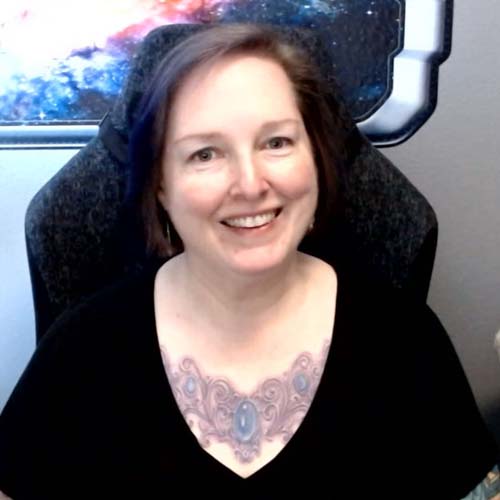
JENNIFER BROZEKJennifer Brozek is an award-winning author, editor, and tie-in writer. A Secret Guide to Fighting Elder Gods, Never Let Me Sleep, and Last Days of Salton Academy were all finalists for the Bram Stoker Award. Jennifer has been a finalist for the Hugo Award, Short Form Editor, multiple times. She was awarded the Scribe Award for best tie-in Young Adult novel for BattleTech: The Nellus Academy Incident and Shadowrun: Auditions. |
Tom Joyce is a volunteer and affiliate member who writes a monthly feature for the HWA blog called “Nuts & Bolts,” featuring interviews about the craft and business of writing. Please contact him at TomJHWA@gmail.com if you have suggestions for future interviews.