
 By Tom Joyce —
Mobsters have a long history with horror. No, this is not an exposé. Stephen King, Clive Barker, and Laird Barron have written about them. They’ve prowled the shadowy underworlds of John Constantine and Felix Castor, and taken center stage in everything from survival horror to Twilight Zone episodes.
If your horror fiction includes mobbed-up characters and you’d like them to ring true, legendary crime writer George Anastasia offers some advice in this month’s edition of Nuts & Bolts.
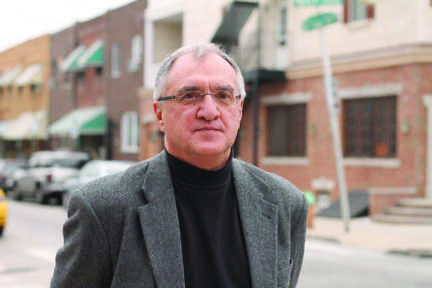
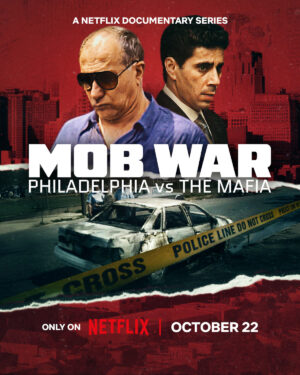
Nearly 50 years ago, George started covering the local Mafia for the Philadelphia Inquirer, and did such a good job that mob boss John Stanfa put out a hit on him. He’s since released six books, profiling real-life criminals including mafiosi and outlaw bikers. His work has been featured in “Playboy” and “The Village Voice,” and he’s worked as a consultant on projects for “ABC,” “Discovery Channel,” “History Channel,” and “National Geographic Channel.” George also features prominently in “Mob War: Philadelphia Vs. the Mafia,” a docuseries chronicling the violent conflict between Stanfa, an old-school Sicilian, and a rebellious faction of “Young Turks” led by Joseph “Skinny Joey” Merlino in the 1990s.
 Q: WHAT ADVICE WOULD YOU GIVE A FICTION AUTHOR WHO WANTS TO WRITE A REALISTIC PORTRAYAL OF MOBSTERS?
A: Read newspaper and magazine accounts about organized crime figures and look for documented (federal court records, defense attorney filings, etc.) examples of mobsters talking in unguarded moments. There’s a lot out there.
The biggest problem with writing non-fiction is the lack of dialogue but given the extensive use of electronic surveillance, there plenty of examples of mobsters talking about anything and everything – from petty gossip to murders.
WHAT ARE SOME COMMON MISPERCEPTIONS ABOUT COSA NOSTRA, OR ORGANIZED CRIME IN GENERAL?
A: Organized crime is more often disorganized crime.
It’s not monolithic and while there is a structure and an organization, individuals operate more often in their own best interest motivated, like everyone else, by greed, pride, a desire to succeed, the quest for status.
Don’t stereotype. There are wiseguys who are smart, clever and well-read. And there are thugs. There are guys only interested in money. Guys who only care about their status in the organization. Guys who have a strong sense of family (with a small F) and guys who are jerks.
But the same could be said for members of any “profession.”
Don’t lose sight of that.
Q: YOU’VE WRITTEN ABOUT ORGANIZED CRIME GROUPS FROM COSA NOSTRA TO OUTLAW BIKER GANGS. IN YOUR EXPERIENCE, IS THERE A COMMON MINDSET OR PERSONALITY TYPE AMONG PEOPLE WHO END UP IN THOSE ORGANIZATIONS?
A: No. See notes from #2. It’s important to remember that human nature, education, upbringing, associations, success and failure, all the things that shape any one of us, has played the same role in shaping the mobster you are writing about. They have a back story.
Some clearly are psychopaths, but they are usually the exception rather than the rule.
Q: DO YOU HAVE ANY ADVICE ON WRITING ABOUT CHARISMATIC CRIMINALS SUCH AS JOEY MERLINO IN “MOB WARS” WITHOUT ROMANTICIZING THEM OR GLOSSING OVER WHAT THEY DO?
A: This is a problem. To make a story work and to entertain, it’s better to have a character that a reader can relate to and that a reader can like. In fiction you need that. In real life, I think I’ve been guilty of making a character more appealing for the same reason, even though I’m dealing with reality.
Joey Merlino is a prime example. I think he benefited from a media portrayal over the years that made him appear both self-deprecating and charismatic. In fact, the person you see in his podcasts – arrogant and somewhat bitter – is probably a more accurate depiction.
Q: CAN YOU RECOMMEND ANY RESOURCES – PRINT OR POPULAR MEDIA – FOR FICTION WRITERS WHO WANT TO GET A GOOD IDEA OF WHAT MOBSTERS ACTUALLY DO, AND HOW THEY CONDUCT THEMSELVES?
A: See note #1. There is a lot out there on the record in court cases and investigations. And there have been so many movies and books based on real events and characters that there is a wealth of information.
Q: CAN YOU GIVE US ANY ADVICE ON WRITING IN GENERAL?
A: Use a rough outline where you have – in broad terms – a beginning, a middle and an end.
And when you’re writing, always stop before you’re done. Leave something to come back to so that you pick up the train of thought and story line the next time you sit down.
Q: DO YOU HAVE ANY PROJECTS IN THE WORKS THAT YOU’D LIKE US TO KNOW ABOUT?
A: Just finished a book about (long-time Philadelphia mob boss) Angelo Bruno. Won’t be out for another year, but I think it’s an interesting story. More to him that the common perceptions.
He was NOT the docile don. And his supposed ban on narcotics was hypocritical. Drugs and Atlantic City were the reasons he was killed, I believe.
 |
GEORGE ANASTASIAGeorge Anastasia is a veteran reporter who has covered organized crime in Philadelphia and South Jersey for 50 years. He is a former Philadelphia Inquirer reporter and an expert on organized crime and the American Mafia. George has been named by 60 Minutes television profile as “one of the most respected crime reporters in the country.” He is now a renowned author of multiple books. |
Tom Joyce is a volunteer and affiliate member who writes a monthly feature for the HWA blog called “Nuts & Bolts,” featuring interviews about the craft and business of writing. Please contact him at TomJHWA@gmail.com if you have suggestions for future interviews.