Halloween Haunts: What Monsters Do by David Sandner
It’s Halloween season! Time for the monsters to come out of the garage where they’ve waited all year to play on the lawn and under the eaves of the porch. Time for the monsters to have their eyes glow in the night and whisper about death. Some people find monster decorations or costumes too scary—for children, in particular.
The thing is: monsters are meant to be scary. They haunt you and hunt you and draw you into the land of the undead or…just want to eat you. It is not pleasant, but it is a thrill. That’s their first gift! The season of light is coming and will have its due. But first the darkness must be acknowledged. The visceral, unthinking, powerful jolt monsters deliver brings us alive! Monsters are fun because they are scary!
But there is another gift held out to you in their dripping claws. The world can be a frightening place and monsters, when they arrive to us in stories, teach us things we need to know about what we fear. Monsters walk with us in the darkest places. We put our monster decorations out to scare away even more terrible things that await beyond the orange-colored lights glowing round our homes. I loved wearing monster costumes as a kid. I felt emboldened. Those of us that love monsters find in them power and comfort in a scary existence.
 I needed monsters as a child and need them still. I am grateful to my parents for letting me read the Brothers Grimm, where I first found horror in a pure vein. Many young readers today, as in the Victorian era, only get expurgated tales…but I hope some child readers still find what I found: strange and horrible tales for our wild enjoyment! There, in the safe confines of story, one can feel terror twinned with wonder, the two together revealing the world to us in ways that parents often do not know how to explain. The darker motivations of so many bewildering acts around us become clearer. We need to know the darkness of our shared human world to navigate life, and monsters bring us crucial lessons about all that along with the fun.
But there’s a third gift: as we grow up, those of us who love monsters realize a darkness waiting in our own hearts that we must own up to (or be devoured by). We are also the monsters we fear. This is the secret power of Shelley’s Frankenstein: her Creature is the first modern monster, one we identify with instead of only wanting to destroy—yet the Creature murders innocents to “glut the maw of death.” He is a monster, but we feel for him in his suffering. The reason why some confuse Victor’s last name with the Creature is that they are shadows of each other, they are in some sense one—and it is the Creature’s isolation and suffering that matters most, not Victor’s whining. He is the main figure. But the Creature has no name that could be put on the cover! We empathize with the outcast, knowing what it is to feel lonely and wretched ourselves; normally, we have no way to talk about it and it all feels strangely shameful…a secret of our inner life…yet, here we all are in a book! In Shelley’s masterpiece, we feel seen, and it makes it more possible somehow for us to carry on.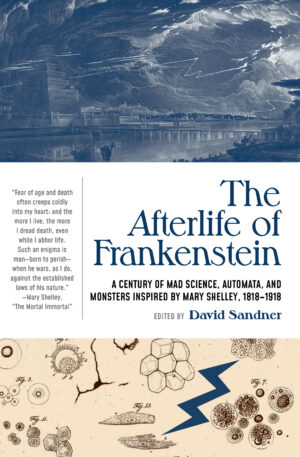
There is yet one more gift I want to point to, one difficult to grasp but, I think, the key to everything. First, you must notice that monsters love us far, far too much for anyone’s good. The Creature hated Victor, yet left him conies to eat so that he would not starve in the icy wastes. Not just to prolong his suffering, no, but because he loved him. You see, beyond or without the malevolent regard of the monster lies something worse—nothing. Nothingness. Monsters give meaning to things and without them…we may have none.
In Macbeth, perhaps the greatest horror play, we have ghosts who want revenge, and imaginary daggers of guilt, and witches who weave a terrible magic to ensnare Macbeth—and none of these are the worst of it. The greatest horror is beyond psychology or the material presence of the supernatural or vengeance. Toward the end of the play, when Macbeth hears of the death of his wife, a woman he loved and told all his darkest secrets when the play begins, his reaction is muted. He is dead inside and life has lost meaning. He makes a handful of remarks on her passing and says of life: “It is a tale/ Told by an idiot, full of sound and fury/ Signifying nothing.” This is horror beyond telling. Macbeth has realized that all his ambitions and dark desires are useless and void, senseless. Monsters, with their ravenous desires and anguish, motivate the plot of what might otherwise be a plotless world. Monsters make stories run. They make the world mean. They give this gift to us freely. We shore these fragments against our ruins.
The witches’ motivations for their machinations against Macbeth are never clear—but what is clear is that they are focused, malevolently but completely, on Macbeth. He matters to them! We matter to our monsters! They make plans to meet him on the heath. They set a trap that he must fall into—and they know him intimately enough to know he will fall. When monsters focus intently on us, when they chase us through the darkening woods, when they wait to strike from under the bed until dead of night, when they stare with empty eyes from behind their masks standing on a streetcorner until we happen to look out the window, when they know, no matter how cleverly we outsmart them, where we are hiding or what our next turn will be, uncannily right every time, they are telling us we matter! They care! How long did they wait? How long did they study us? Nothing in the world matters to them more than us!
We project our fears outward and tell monster stories; we feel rage at the injustice of cruel monstrousness in the world and write monster stories; we scry the desolation of our human hearts and write monster stories. And without monsters and their intense focus on us, what is there? We define ourselves against them. Monsters make meaning of an otherwise inscrutable and inchoate world. They make the unknowable legible by their impossible presence.
So let your children dress as monsters, and if they are scared, reassure them as you put them to bed. Monsters have taught you how to protect them. They will be all right. And when they are snuggled safe in bed, hug your monsters closer still with all your desperate need of them. Without them…I literally cannot say what would be. Monsters hold the world together, their impossible presence defining its limits. What don’t we owe them? Without them, I wonder, standing at the abyssal edge of meaning, would we signify at all?
Happy Halloween! Celebrate, celebrate our monster friends! And let the monsters out to play!
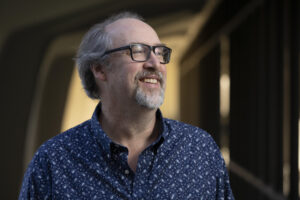
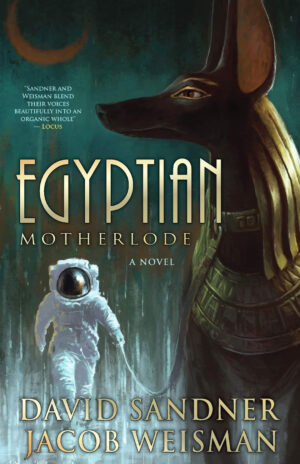
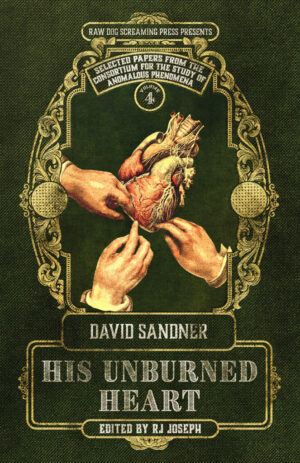
David Sandner is a Shirley Jackson Award finalist for His Unburned Heart (Raw Dog Screaming, 2024), a novelette about Mary Shelley and her husband’s heart, and a Mythopoeic Award nominated scholar who recently published The Afterlife of Frankenstein: A Century of Mad Science, Automata, and Monsters inspired by Mary Shelley, 1818-1918 (Lanternfish, 2023). Novel Egyptian Motherlode (2024) and novelettes Mingus Fingers (2019) and Hellhounds (2022), co-written with Jacob Weisman, came out from Fairwood Press. Recent short work appears in the HWA Poetry Showcase, Abyss & Apex, Penumbric, Weird Tales, Asimov’s, The Mammoth Book of Dark Magic, and others. See davidsandner.com.