


 By Tom Joyce —
Some writing teachers will tell you there’s no secret code to freelancing success. Timons Esaias begs to differ. He says most publications come with a set of instructions for avoiding the slush pile. It’s a matter of knowing how to read them. In this month’s edition of Nuts & Bolts, writer and workshop teacher Timons shares advice for beginning horror writers on how to get their short fiction and nonfiction published.
Q: How would you recommend aspiring horror writers get started when they want their short fiction or horror-themed nonfiction published?
A: My first suggestion seems basic, but almost everybody screws it up. Learn Proper Manuscript Format and make sure your manuscripts are in it. Alter it only if a specific publisher asks for it. Otherwise stick to PMF religiously. You will look professional.
Second, you’ll need to build your own, personal market list; because each writer is different, and it will save time if you don’t have to repeatedly sort through markets that you’ll never be a good fit for.
Q: How should they find markets?
A: The direct approach is to explore the online market lists like Duotrope, Chill Subs, or Submission Grinder. They allow you to quickly identify self-identified Horror markets. But you should also rub shoulders with the HWA community, and find out where those folks list calls for submissions, and where they discuss markets. Lurk and learn. Facebook has several Open Submission Calls groups, for particular genres, and they can be useful as well.
Here’s another trick. In whatever genre you intend to write, you should be reading one Year’s Best anthology for that genre, every year. Pay attention to which stories are similar to what you’re writing, and submit to the magazines that first published those pieces.
Q: How do they keep track of submissions?
A: Again, Duotrope, Chill Subs, and Submission Grinder will do that for you, if you’re willing to input your submission data. I personally use Duotrope to keep track of what’s in submission; but I also keep a computer log and a ledger. The computer spreadsheet lists each market I send to, and by listing things there (and how they turned out) I avoid sending the same piece twice, or submitting when there’s already another piece there waiting. My hand ledger has a page for each piece I’m sending out, listing the market, the send date, the result date. Again, this helps me plan my submission campaign for individual pieces, and helps avoid mistakes.
The spreadsheet and ledger provide backup for the day the Russians decide to punish the writing community by hacking and nuking all writer’s sites, worldwide.
Q: What information should they include in their bios, especially if they’re beginners without an extensive catalogue?
A: Don’t apologize for lack of credits, that’s the first thing. If you’re in a prestigious writing program, you can get away with saying that. Otherwise, look at the kinds of bios the market uses and pick one of two approaches. If the bios you see seem to be dry and all about credentials, then mention your job or course of study, maybe where you live, and that’s it. On the other hand, if the bios you see are more personal, then mention where you live, and one intriguing or comical line. He has visited far too many coastal fortifications. Or Homeland Security has requested that she say no more. Or They collect antique distaffs and modern crossbows.
Q: What is the essential discipline when it comes to the submission process?
A: Persistence. My first story to be in three Best-of-the-Year anthologies? Rejected 20 times, and I never changed a word. My flash fiction that won the Winter Anthology Award ($1,000 prize)? Also about 20 rejections, also never changed a word.
Q: What evaluation should they do about a publication before submitting?
A: Editors will tell you to religiously read their publication to understand their tastes. That’s not false, but what you are reading is what they bought months ago, and they’re over it.
My advice is to read a full issue of each of your top five markets every year. Read it cover-to-cover, and take notes of what you are seeing. Two things to focus on especially are the first page and the ending of each piece. What’s the mix of fast starts to gradual starts? Dialogue starts versus narrative versus we’re in a vehicle driving to where the story is? And pay particular attention to how many upbeat endings there are compared to tragic downbeat endings. Also status quo endings, if there are any (those are where stuff happened, but we’re back to normal and evil was not conquered nor the girls gotten).
Then look at your pieces and see if they’re a match, or likely not to fit.
Beyond that, read the guidelines of other markets, and send your piece if it seems likely to fit at all. There is not enough time to read all the magazines that you might be submitting to.
Q: Is it true that you have used a pillow as a protagonist? And Concord grape jelly packets as an antagonist?
A: Write what you know; that’s what everybody tells you. In my defense, those were two separate stories.
[You can listen to the pillow story here: https://www.podomatic.com/podcasts/asimovs/episodes/2020-01-08T10_10_38-08_00
The grape jelly packet story can be read or listened to here: https://clarkesworldmagazine.com/esaias_09_21/ ]
Q: Whist or bridge?
A: Whist.
Q: King’s Indian Defense or Benko Gambit?
A: Benko, and hope they take the pawn.
Q: Where can people learn more about you or follow you online?
A: Well, it’s usually best to start with a FOIA request to Homeland Security, but online there’s my badly tended web page at www.timonsesaias.com; brief announcements at Bluesky: @timonse.bsky.social and X: @EsaiasTimons, or they can friend me on Facebook: https://www.facebook.com/timons.esaias/ A direct web search of my name usually brings up numerous links to my work.
Q: Do you have any projects you’d like HWA members to know about?
A: It’s so kind of you to let me mention that I’m teaching workshops in November [ https://pennwriters.org/content.aspx?page_id=4002&club_id=522048&item_id=2963962 ] and December [Flash Fiction Magazine] on the subject of freelancing.
I’m working on a writer’s guide to warfare and military science, focusing on the basics and how to incorporate them into your writing. Especially if you don’t have much personal knowledge of warfare. The working title is Warfare for Writers, and I’ve been giving workshops on the subject for years, but it’s time to finish putting together the book.
[EDITOR’S NOTE: At my invitation, Timons provided the answers to questions that I lacked the knowledge (and wit) to ask. If we ever meet at a conference or something, please don’t expect me to know what a “Benko Gambit” is. Especially if lives are at stake. — TJ]
 |
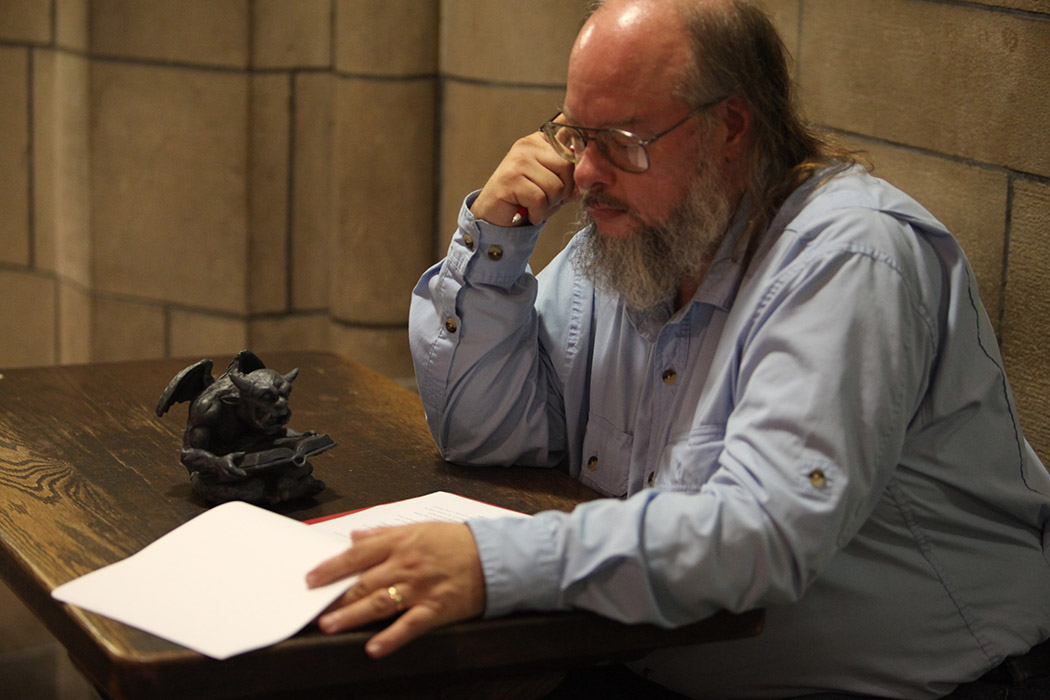
TIMONS ESAIASTimons Esaias is a satirist, writer and poet living in Pittsburgh. His works, ranging from literary to genre, have been published in twenty-two languages. He has been a finalist for the British Science Fiction Award, and he won the Winter Anthology Contest, the SFPA Poetry Contest, and the Asimov’s Readers Award (twice). He is a recent Pushcart nominee and Intrepid Award winner for the story “To Do.” He is widely deplored for using a pillow as a protagonist, and, in another story, Concord grape jelly packets as an antagonist. His poetry collection is Why Elephants No Longer Communicate in Greek.
|
Tom Joyce is a volunteer and affiliate member who writes a monthly feature for the HWA blog called “Nuts & Bolts,” featuring interviews about the craft and business of writing. Please contact him at TomJHWA@gmail.com if you have suggestions for future interviews.