
 By Tom Joyce —
Becky Spratford recommends a simple strategy for horror writers looking to expand their readership. Go to your local library and meet your new best friends – the librarians. If you’re a local author, chances are good that your local librarians will not only be eager to get your book in front of patrons, but willing to help you promote it.
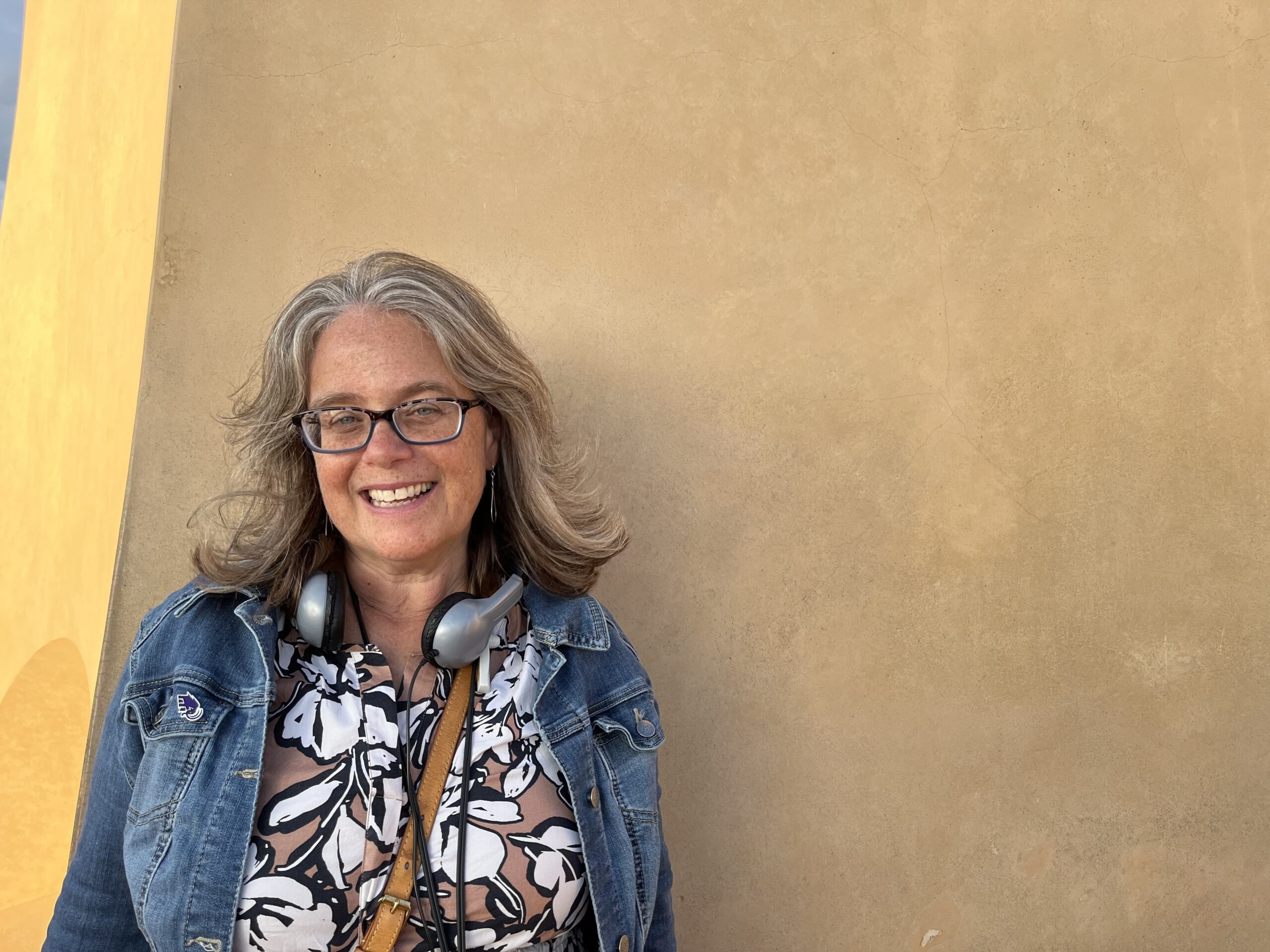
Becky, a Bram-Stoker-Award-winning author and an Illinois librarian who trains library staff world-wide on matching books with readers, offers advice in this month’s edition of Nuts & Bolts about why getting your books into libraries is a good thing, how to make it happen, and where to learn more about the many resources public libraries offer writers.
Q: Can you explain briefly how books get picked by libraries to be added to their collections?
A: There are many ways libraries can and will add your book. First, it must be understood that library collections are crafted by professionals. Librarians, especially those who are buying and weeding books for their collections, have a masters degree in library science. Therefore, it helps to understand that there are things at play when crafting a collection that are more complicated than adding just one book. Second, all libraries have a detailed collection development policy which explains how they prioritize what books they will add to their collections and how they will procure them. Remember, public libraries buy materials with taxpayer dollars so everything we spend our money on is clearly defined, delineated, and denoted in our policies. We are accountable to the taxpayers always. We are the experts in running the library, but it is their money we use to do so.
With this knowledge, now I can begin to address how librarians find the titles they do end up adding to their collections. The number one way libraries find titles is through pre-publication reviews. Libraries are ordering books at least 1 month, but often more like 3 months, before they are released. We rely on journals like Booklist, Library Journal, and Publishers Weekly who do pre-pub reviews in order to help us make our selections. We read these reviews and then go to our general ordering sites (most commonly Ingram) to place the books in a cart for ordering. Libraries are ordering dozens of books at a time every time they push through an order. Even the smallest libraries are not buying 1 book at a time. There are many librarians who work 40 hours a week, 52 weeks a year, doing nothing more than ordering books.
We also use award nominee lists, best-of lists, genre-specific resources, and Netgalley or Edelweiss to identify titles that our patrons would enjoy. And that last part – titles our patrons would enjoy – that is what drives librarians to choose what they choose. We know the authors our patrons like and we are constantly looking for more titles that they would also enjoy if only we had them on the shelf.
This means when there is a new trend (like a rise in the mainstream popularity of horror), librarians will work harder to find titles to satisfy demand, looking everywhere we can for more titles.
All this being said, most collection development policies put a premium on having titles by and about people from their immediate area. In fact, being from a town or living in a metro region is often enough for a library to add your book.
Q: Is there anything authors can do to improve their chance of selection?
A: Be a user of your library. Full stop. That is the best thing you can do to have your book added to your library’s collection. Use the library first. Talk to the staff. See what is going on. Attend programs. Then, after you are an established user, mention you are an author yourself. Offer to present a program for new and aspiring writers. Ask them how your skills can help other patrons. Offer a copy of your book if they want it. Many will want to buy your book and add it, especially if you do a program for the library. This is the easiest way to be selected by your library.
Once you are in one library, you will get in more both because other libraries in the area will see your library has your book and they might add it to their collections, and because library workers love to talk about the authors who help them. They love to promote local authors, have them present programs, and highlight their contributions to their communities. But library workers also will spread the word about the difficult authors, the ones who should not be invited, the ones who were disruptive, the ones who were mean and they will spread this word just as far and just as wide. So be polite and kind. Do not barge into a library and demand they add your book because you live there.
Now, if you want to be in more than just your local library, my best advice is to get a booth in the exhibit hall of your state’s library conference. Every state has a library association and they have annual conferences either for their state or, in more rural areas, for their region. These booths are very affordable. Getting a booth at the conference closest to you means you can work that local angle I mentioned above on a wider scale. The attendees of these conferences will stop and talk to you. They will ask you about your books. Some will buy books then and there. Others will have to take your information and go back to the library and order through more official channels. Some will buy your book because you were there and supported their conference. In general, a booth at the state library conference is your best way (in terms of time and money) to reach the most number of libraries in your region at once.
Q: Is there anything writers do not know about libraries that they would benefit from knowing?
A: This is the most important thing I can tell anyone reading this interview. No two libraries do things the same way. Even the answers I gave above speak to the general processes involved in getting your books added into a library, but your library will do things in their own way. By definition, libraries are extremely local and governed by their local laws and administrative quirks. Some are run by an independent board, some by a county, others by a city, and some a blending of all these. Some places can buy books from anywhere – Amazon, their local bookstore, Ingram – while others can only buy from their library’s approved purchase locations or companies. Yes, that means some cannot even go down the street to their local book store to buy a book for their collections, while others can get books from any place they can find them. In other libraries if there is not a professional review available for a title, they cannot add it, no exceptions. This, unfortunately, is because of the large number of attempts by bad actors to remove items from library collections. Without a professional review it is often hard to defend a challenge to a book from a member of the public; as a result, some library administrators will not allow that book to be added to the collection no matter how good it is or how many patrons would enjoy it.
To complicate things further, the people who add books to the collection of a library differ from place to place. For some libraries, the people you see at the desks are also the ones selecting and ordering the books, while in others, the collection development team work behind the scenes, sometimes even off site, and you would never encounter those people as a patron. You can talk to the person at the desk about your book and they have no say if it gets ordered in these cases. All they can do is advocate for you, especially if you followed the advice above.
Q: How do small and indie publishers tend to fare when it comes to the selection process?
A: Since the largest number of purchased books by libraries are identified through reviews, small and indie publishers need to figure out how to get reviewed. Good news for horror writers though, horror is hot and Booklist and Library Journal in particular are looking for more titles and love to include the smaller publishers.
But your best chance for a review as a small or indie press title is Forward Reviews: https://www.forewordreviews.com/. They are a trusted review source of indie books used by most libraries.
Another way small press titles enter library collections is through their ebook collections. Overdrive’s Libby interface is by far the most common way libraries in America provide ebooks to their patrons. They have an indie program to help small presses and self-published authors get their books up on their platform and loaned to libraries. Libraries will add ebooks with fewer restrictions than print books. It is a way for them to give unknown authors a try without giving up shelf space. And if readers find your books on Libby, the library may take a chance and add it in print as well.
I would highly suggest small and indie publishers investigate joining the Independent Book Publishers Association (https://www.ibpa-online.org/ as they can help you navigate this world. They have a program where they work with libraries and library conferences. I am a regular speaker for them as well.
Q: What are the benefits to writers of having their books in libraries?
A: So many. One sale to a library opens up your book to a world of readers; it can be loaned all over the world. Library users are more likely to buy books than non-library users; one checkout of one book can lead to many sales. Writers want their books to be read and libraries want to match their patrons with a book they will love.
Q: Can you recommend any resources that you think horror authors interested in learning more about the industry should know about?
A: The American Library Association (https://www.ala.org/) and The Public Library Asssociation (https://pla.org/) are both a great place to go to learn more about Libraries.
My blog: RA for All (https://raforall.blogspot.com/) is the major resource for library workers who are working with leisure readers.
And if you are an HWA member and have questions about our Libraries Committee, you can email libraries at horror dot org to reach myself and my co-chair Konrad Stump.
Q: WHERE CAN PEOPLE FOLLOW YOU ONLINE?
A: I am not really on social media except for Bluesky: https://bsky.app/profile/raforall.bsky.social
But I write 5 days a week on my blog RA for All (https://raforall.blogspot.com/)
Q: Do you have any projects that you’d like HWA members to know about?
A: Currently I am reviewing books monthly for Booklist Magazine and 4x a year for Library Journal along with my annual Horror Genre Preview which appears in LJ’s July issue.
I am always working on Summer Scares, the HWA Libraries National Reading Program co-sponsored by Booklist, Book Riot, NoveList and IREAD. You can learn more about that at https://raforallhorror.blogspot.com/p/summer-scares.html.
My book Why I Love Horror: Essays on Horror Literature recently won the 2025 Bram Stoker AwardⓇ for Long Nonfiction. I will be appearing in various places to support that books and some of the included authors throughout this coming Fall. You can check RA for All for details.
 |
BECKY SPRATFORDBecky Spratford [MLIS] is a Librarian in Illinois specializing in serving patrons ages 13 and up. She trains library staff all over the world on how to match books with readers through the local public library. She runs the critically acclaimed RA training blog RA for All, writes reviews for Booklist and a Horror review column for Library Journal. Becky has been an elected Library Trustee and a former Board member for both the Reaching Across Illinois Library System and the Illinois Library Association. Known for her work with Horror readers, Becky is the author of three text books for library workers and the Locus-Award-nominated and Bram-Stoker-Award-winning Why I Love Horror [Saga Press, 2025]. Becky was named one of the Chicago Tribune’s “Chicagoans of the Year” in 2025. She is on the Shirley Jackson Award Advisory Board and is a proud member of the Horror Writers Association, currently serving as the Association’s Secretary and Co-Chair of their Libraries Committee. You can follow Becky on Bluesky @raforall.bsky.social.
|
Tom Joyce is a volunteer and affiliate member who writes a monthly feature for the HWA blog called “Nuts & Bolts,” featuring interviews about the craft and business of writing. Please contact him at TomJHWA@gmail.com if you have suggestions for future interviews.